


Andrew Murray foi um pastor, professor e escritor.
Nasceu em May 09, 1828 · Graaff-Reinet, South Africa.
Viveu na África do Sul.
Morreu em Jan 18, 1917 · Wellington, South Africa.
Inspirou-se em
Escreveu sobre vida espiritual mais de 200 livros.
BIOGRAFIA
“Seu pai era pastor vinculado à Igreja Presbiteriana da Escócia, que, por sua vez, mantinha estreita relação com a Igreja Reformada da Holanda, o que foi importante para impressionar Murray com o fervoroso espírito cristão holandês.
Andrew experimentou o novo nascimento aos 16 anos, na Holanda. Após isso, dedicou muito tempo, muitas madrugadas, a orar por um avivamento em seu país e a ler sobre experiências desse tipo ocorridas em outros países. Foi para a Inglaterra com 10 anos e quando retornou para a África do Sul, atuando no ministério pastoral e evangelístico, levou consigo um reavivamento que abalou o país. Seu ministério enfatizava especialmente a necessidade de os cristãos habitarem em Cristo. Isso foi despertado especialmente quando, ao voltar para a África, deparou-se com a grande extensão geográfica em que deveria ministrar. Aí começou a sentir necessidade de uma vida cristã mais profunda. Murray aprendeu suas mais preciosas lições espirituais por meio da escola do sofrimento, principalmente após uma séria enfermidade. Sua filha testificou que, após essa doença, seu pai manifestava “constante ternura, serena benevolência e pensamento altruísta”. Essa foi uma expressão de sua fé simples em Cristo e a Ele rendida.
Seu ministério, pela influência recebida do pai, foi caracterizado por profunda e ardente espiritualidade e por ação social. Em 1877, viajou pela primeira vez aos Estados Unidos e participou de muitas conferências nos EUA e na Europa.
Sua teologia era conservadora e se opunha francamente ao liberalismo. Em seus livros, enfatizou a consagração integral e absoluta a Deus, a oração e a santidade.
Durante os últimos 28 anos de sua vida, foi considerado o pai do Movimento Keswick da África do Sul. Muito dos aspectos místicos de sua obra deve-se à influência de William Law. Murray, assim como Law, Madame Guyon, Jessie Penn-Lewis e T. Austin-Sparks, conheceu o Senhor de forma profunda e se tornou um dos mais proeminentes no movimento da vida interior.
Foi acometido de uma infecção na garganta em 1879, a qual o deixou sem voz por quase dois anos. Foi curado dela na casa de uma família cristã em Londres. Como resultado dessa experiência, veio a crer que os dons miraculosos do Espírito Santo não se limitavam à Igreja primitiva. Para ele, uma das características da vida vitoriosa era uma profunda e silenciosa percepção de Deus e uma intensa devoção a Ele.
Por crer no que Deus pode fazer por meio da obra de literatura, Murray escreveu mais de 250 livros e inúmeros artigos. Sua obra tocou e toca a Igreja no mundo inteiro por meio de escritos profundos, incluindo The Spirit of Christ (O Espírito de Cristo), The Holiest of All (O Mais Santo de Todos), With Christ in the School of Prayer (Com Cristo na Escola de Oração), Abide in Christ (Habite em Cristo), Raising Your Children for Christ (Criando seus Filhos para Cristo) e Humildade, a Beleza da Santidade, os quais são considerados clássicos da literatura cristã. Entre tantos que foram ajudados por ele, podemos mencionar Watchman Nee, cuja obra O Poder Latente da Alma traz marcas do pensamento de Murray.”
(Extraído do livro Humildade, a Beleza da Santidade, publicado pela Editora dos Clássicos)
WIKIPEDIA: https://en.wikipedia.org/wiki/Andrew_Murray_(minister)
Andrew Murray (9 May 1828 – 18 January 1917) was a South African writer, teacher and Christian pastor. Murray considered missions to be “the chief end of the church”.[1]
Early life and education
Andrew Murray was the second child of Andrew Murray Sr. (1794–1866), a Dutch Reformed Church missionary sent from Scotland to South Africa. He was born in Graaff Reinet, South Africa. His mother, Maria Susanna Stegmann, was of French Huguenot and German Lutheran descent.[1]
Murray was sent to the University of Aberdeen in Scotland for his initial education, together with his elder brother, John. Both remained there until they obtained their master’s degrees in 1845. From there, they both went to the University of Utrecht where they studied theology. The two brothers became members of Het Réveil, a religious revival movement opposed to the rationalism which was in vogue in the Netherlands at that time. Both brothers were ordained by the Hague Committee of the Dutch Reformed Church on 9 May 1848 and returned to the Cape.
Murray married Emma Rutherford in Cape Town, South Africa, on 2 July 1856. They had eight children together (four boys and four girls).
Residence in Utrecht
In 1846 they lived in the Minrebroederstraat (number unknown).
From 1847-1848 they lived at the Zadelstraat 39.
Religious work in South Africa
Murray pastored churches in Bloemfontein, Worcester, Cape Town and Wellington, all in South Africa. He was a champion of the South African Revival of 1860.
In 1889, he was one of the founders of the South African General Mission (SAGM), along with Martha Osborn and Spencer Walton. After Martha Osborn married George Howe, they formed the South East Africa General Mission (SEAGM) in 1891. SAGM and SEAGM merged in 1894. Because its ministry had spread into other African countries, the mission’s name was changed to Africa Evangelical Fellowship (AEF) in 1965. AEF joined with Serving In Mission (SIM) in 1998 and continues to this day.
Through his writings, Murray was also a key “Inner Life” or “Higher Life” or Keswick leader, and his theology of faith healing and belief in the continuation of the apostolic gifts made him a significant forerunner of the Pentecostal movement.[2]
In 1894, Murray was visited by John McNeill and Rev. J Gelson Gregson, the ex-British Army Chaplain and Keswick convention speaker. [3]
Death
Murray died on 18 January 1917, four months before his 89th birthday. He was so influenced by Johann Christoph Blumhardt’s Möttlingen revival that he included a portion of Friedrich Zündel’s biography at the end of With Christ in the School of Prayer.
Works
A bibliography compiled by D. S. B. Joubert estimates that Murray published over 240 books and tracts;[4] this number includes about 50 books, many of them authored in both Dutch and English,[5]
-

-
Sale!
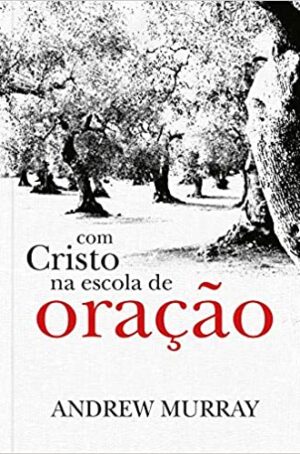
Com Cristo na Escola de Oração
Original price was: $20.00.$15.00Current price is: $15.00. -
Sale!
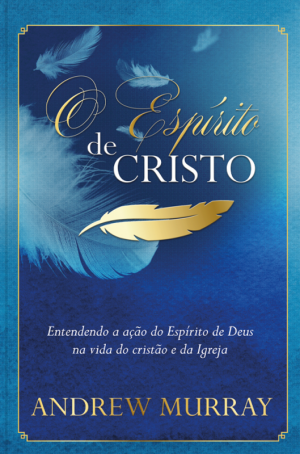
O Espírito de Cristo
Original price was: $23.00.$21.00Current price is: $21.00.